
Java Neo Folding & Rolling Guide
Java Neo Folding & Rolling Guide
Folding and rolling a Java Neo depend on the complete setup, not the frame alone. Wheel size, tyre width, rack, easywheels, extender, suspension and folded wheel position all interact. A bike that rests correctly on rack wheels may need a different plan from one that relies on an extender.
This guide uses the compatibility notes published in the Java Neo Upgrades collection. It helps you identify what to check without promising that one configuration fits every bike.
Separate folding from rolling
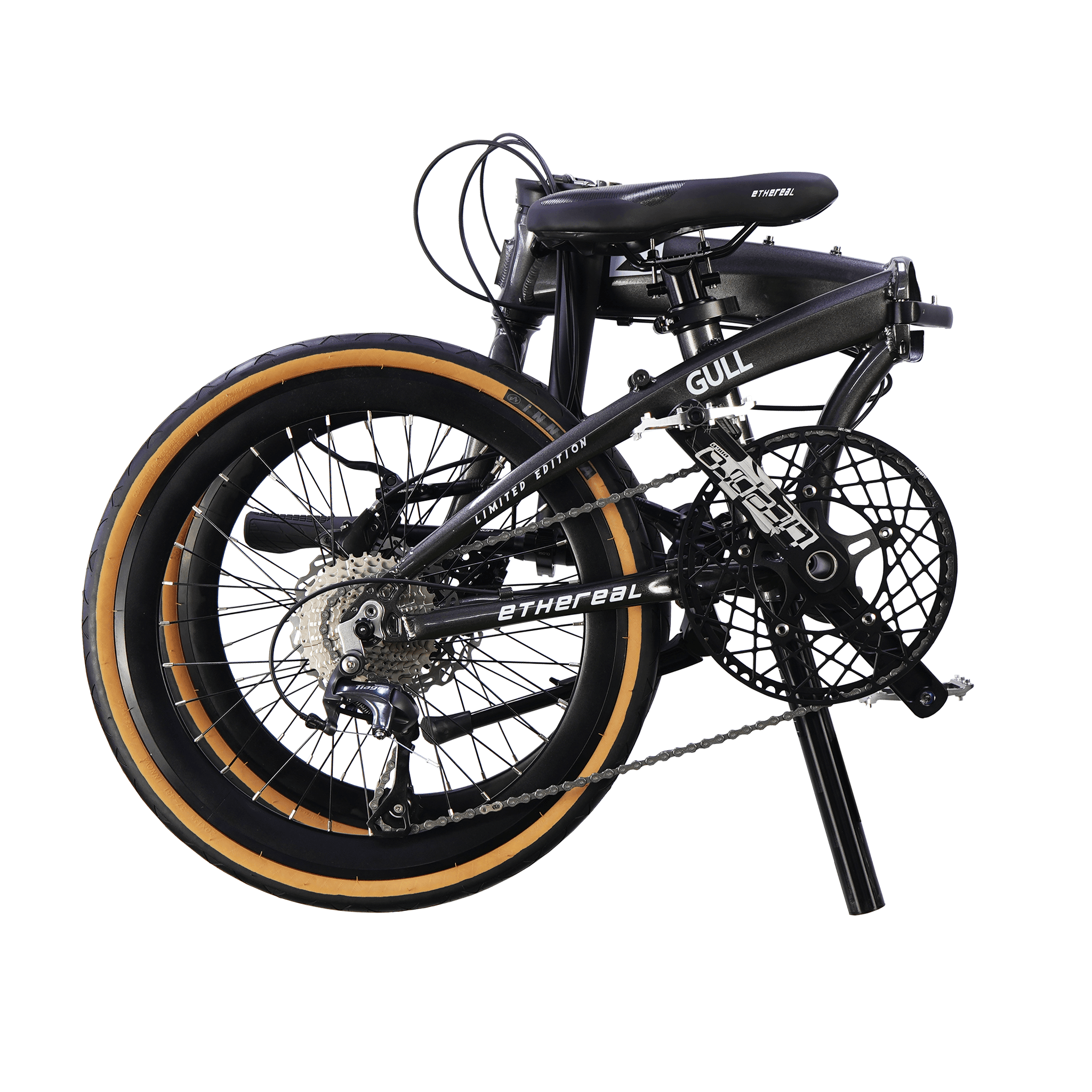
Folding describes how the frame and wheels come together and whether the parts clear one another. Rolling describes how the folded bike is supported and moved. The same part can affect both, but the goals are different.
| Goal | What to inspect | Relevant current products |
|---|---|---|
| Clean folded position | Tyre-to-frame clearance, hook, wheel alignment | Wheel-clearance adapter |
| Support on rack wheels | Rack size, wheel size, easywheel position | Java Neo rear rack |
| Support with extender | Frame, front tyre, easywheel, suspension clearance | Custom Easywheel Extender |
| Wide-tyre fold | Tyre size, main-frame contact, rack or extender | Billy Bonkers adapter variants for the confirmed 20 x 2.0 setup |
Start with the base bike
Identify the exact model from the Java Neo range. Current bikes cover 14-, 16- and 20-inch wheels and aluminium or full-carbon frames. Do not choose a rolling part using the brand name alone.
Record the current configuration
- Model, wheel size, frame and fork version.
- Tyre model and width.
- Rear rack, if installed.
- Easywheel type and size.
- Extender, if installed or planned.
- Rear suspension or other parts that alter clearance.
Fold the bike and inspect the contact points. Look at the distance between tyre and main frame, the front wheel position, the rack wheels or extender, and the ground clearance. If a product listing calls for assessment, provide photos of these areas.
Using a rear rack for folded support
The Java Neo rear rack is offered for selected 16- and 20-inch trifold setups. In an appropriate configuration, the rack supports the folded bike on its rack wheels.
The wheel-clearance adapter page makes a useful distinction: when a rear rack already supports the folded bike correctly, that adapter is not generally recommended solely for rolling. This prevents unnecessary parts from being added to a setup that already meets the rolling goal.
An adapter may still be relevant if you need one of its other stated functions, including replacing the original hook, providing clearance for a compatible chainring up to 60T, correcting folded wheel position or preventing an extender easywheel from meeting the tyre.
Using an Easywheel Extender
The current Java Neo custom Easywheel Extender is an 88 mm aluminium part listed for Java Neo 3 variants, including full carbon. It shifts rolling support toward the easywheel setup and reduces reliance on the front wheel. The listing also mentions larger easywheel support and additional ground clearance for selected suspension upgrades.
The part is designed with clearance between the front tyre and extender rod. Compatibility still depends on tyre width, wheel size, easywheel, suspension and frame. Wider tyres such as Billy Bonkers can require assessment or modification, so the product page should be checked against the full build.
Correcting folded wheel clearance
The 3-in-1 integrated hook adapter replaces the original hook and changes folded wheel positioning. The page lists Java Neo 16 and 20, aluminium fork, carbon fork and Java Neo 3 ECO compatibility. It requires no drilling or permanent modification according to the listing.
Variants are divided by tyre and by rack or extender use. Stock-tyre choices cover listed 16- and 20-inch setups. Billy Bonkers variants are confirmed for 20-inch 20 x 2.0 tyres and are offered with or without rack or extender. No confirmed 16-inch Billy Bonkers configuration is listed.
For 1.6- or 1.75-inch tyres, the page says the wider-tyre geometry may be appropriate if the tyre contacts the main frame. Because production-batch fitting can differ, photo assessment is the correct next step when the folded position is unclear.
Build the rolling system in the right order
- Define the support method. Decide whether the folded bike will rest on rack wheels or an extender-based easywheel arrangement.
- Check the fold first. Confirm that tyres, frame, hook and wheels clear one another.
- Add the rolling hardware. Select the rack or extender for the exact model and wheel size.
- Match the clearance adapter. If needed, choose stock or Billy Bonkers and with or without rack/extender.
- Account for suspension. Re-check ground and component clearance after any suspension change.
- Test the completed arrangement. Confirm stable support, free wheel movement and clearance throughout folding and rolling.
Diagnosing common problems
The tyre touches the main frame
Check the tyre marking and wheel size. The adapter page provides distinct stock and 20-inch Billy Bonkers geometries. For intermediate tyre widths or an uncertain fit, use the store’s photo-assessment route.
An extender easywheel is close to the tyre
Verify that the adapter variant is the one specified for rack or extender use. Check extender position, tyre width and any suspension that changes the relationship between components.
The bike already rolls on rack wheels
If the rack provides correct support, the adapter is generally unnecessary solely for rolling. Add it only for another documented need.
Larger easywheels or suspension changed the stance
Treat the new parts as a system. The extender listing specifically ties compatibility to easywheel, suspension, tyre, wheel size and frame. Re-check ground clearance and folded support.
Frequently asked questions
Is there one rolling setup for every Java Neo?
No. The correct arrangement depends on the exact bike and the fitted tyre, rack, easywheels, extender and suspension.
Does the extender fit full-carbon Java Neo models?
The current extender listing states compatibility with Java Neo 3 variants including full carbon, while still requiring the rest of the setup to be checked.
Can I use the Billy Bonkers adapter on a 16-inch bike?
The current listing confirms Billy Bonkers only for a 20-inch 20 x 2.0 setup. It does not confirm a 16-inch Billy Bonkers configuration.
Does the hook adapter permanently modify the bike?
The listing states that it replaces the original hook without drilling or permanent modification.
Where do I check parts?
Use the Java Neo Upgrades collection and verify each live product page before ordering.
Make folding and rolling one coordinated setup
Choose the folded support method first, then check tyre clearance and select only the parts that solve a defined problem. A rack, extender, adapter, easywheels and suspension must work together. When the documented configuration does not exactly match your bike, request a photo assessment before purchase.